

Determining the impact of mycorrhizal fungi on forage legumes
This project will explore whether mycorrhizal colonization can predict growth rate, stress tolerance, and forage quality differences, and the impact that mycorrhizal colonization has on these traits in alfalfa and sainfoin.
Started: 2021 | Completed: 2026
Digging deeper into forage digestion efficiency
Understanding the mechanisms that cause some animals to digest forages more efficiently than others may help to develop tools to select animals that are more efficient on pasture or other high-forage diets, and lower production costs.
Started: 2021 | Completed: 2025
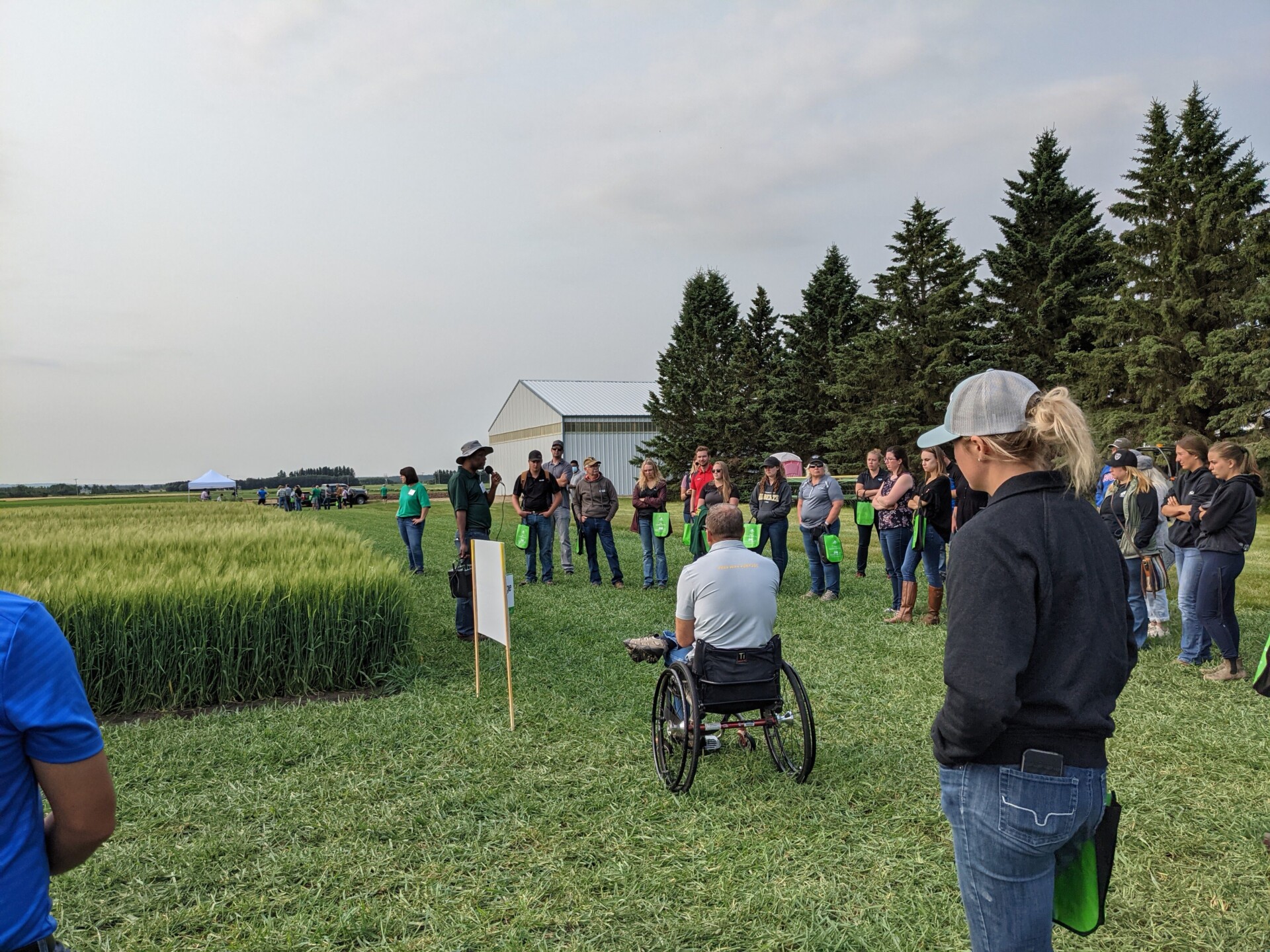
Development of forage barley varieties for western Canada
There is no one single barley variety that will excel at every trait in every environment. Each segment of the livestock industry has its own unique requirements, whether it is cow-calf, backgrounding, or feedlot operations.
Completed: 2024
Benefits of including forages in cropping rotations
Integrating forages into crop rotations can have many benefits such as weed and disease control, increasing productivity, and improvements in soil quality; but the short-term loss of land used to produce more valuable crops can make this management practice seem uneconomical.
Started: 2022 | Completed: 2025
Improving grazing capacity with bloat-free legumes
Including legumes in a pasture improves biodiversity, forage quality, forage yield, and soil nutrient status without having to apply extra nitrogen fertilizer. While alfalfa has long been the legume species of choice, concerns about bloat have often limited its inclusion into forage stands.
Started: 2015 | Completed: 2019
Winter hardy alfalfa
Current varieties of winter hardy alfalfa enter into dormancy in late summer and early fall, meaning that growth ceases during that time. While they are grazing tolerant and winter hardy, after the first graze or cut, regrowth does not occur to an extent that permits a second cut or more flexible grazing systems.
Completed: 2018
Showing 1-12 of 22